Nuclear physics for a different kind of load
Applied Atomics was started by engineers who saw the AI infrastructure power problem clearly and believed compact fission was the right technical answer. We are building the generation plant that data center operators cannot get from the grid.
We saw the same data a lot of people saw, and drew a different conclusion
Paul and Sofia met while working at a national laboratory where Paul led a reactor physics group and Sofia built the control software for research reactors. Both had watched the AI infrastructure buildout accelerate and both came to the same question independently: where does the electricity come from?
The answer they kept reaching was that it does not exist yet, at least not in the form the industry needs. Grid interconnection queues have stretched beyond planning horizons. Wind and solar cannot provide the firm baseload that continuous GPU clusters require. Conventional nuclear plants were not designed for campus co-location or load-following. The gap between what AI operators need and what power markets can provide is not closing on its own.
Applied Atomics was formed to close that gap with a plant design built from the first constraint inward: it has to fit next to a data center, it has to respond to load curves, and it has to be licensable by the NRC on a schedule that matches infrastructure investment timelines.
Headquarters
1330 Broadway, Suite 900
Oakland, California 94607
Incorporated
Delaware C-Corp, 2023
Current Stage
Pre-application engagement with NRC. Simulation environment and engineering design under active development. First partner discussions ongoing.
Contact
What we are building toward, and how
Compact fission that is economical to build, safe to operate adjacent to civilian infrastructure, and capable of responding to the load curves that AI workloads produce.
State the design targets honestly
We present performance figures as engineering design goals and simulation results, not operational data. The difference matters. We will say "our simulation environment showed X" and not present it as demonstrated field performance until we have operational data.
The NRC process is the product
Regulatory approval is not a box to check. It is the mechanism that produces a genuinely safe plant. We engage with NRC staff pre-application and treat each licensing milestone as a quality gate, not an obstacle. A licensed plant is a better plant.
Design for the co-location constraint first
Our design decisions start from the campus co-location use case: compact footprint, air cooling option for water-scarce sites, AI-managed output that tracks load curves. We do not try to adapt a large plant to this context. We build from the constraint inward.
The people building it
A small team with the specific experience this work requires: reactor physics, real-time control systems, nuclear regulatory process, and AI systems.
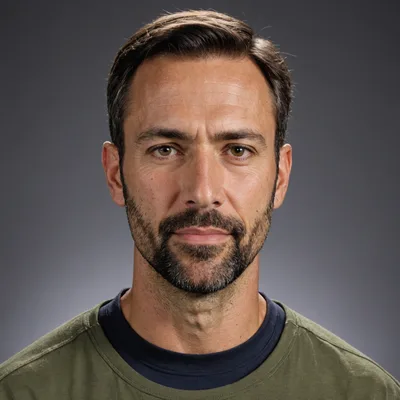
Paul Keutelian
Co-Founder and CEO
Led a reactor physics research group at a national laboratory before founding Applied Atomics. His work focused on compact thermal reactor configurations and fuel cycle modeling. Applied Atomics is his second company.
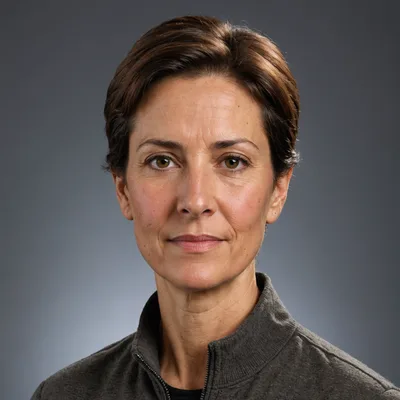
Dr. Sofia Marchetti
Co-Founder and CTO
Built control software for research reactors at the same national laboratory where she and Paul met. Her PhD thesis was on predictive control models for neutron flux management. She leads all engineering development at Applied Atomics.
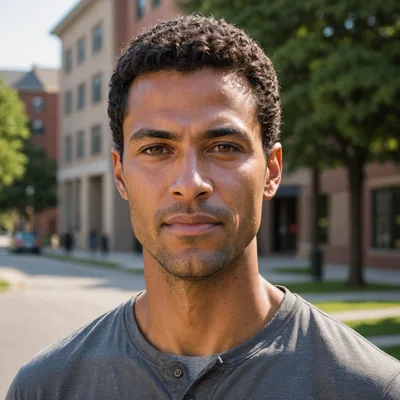
Jamal Osei
Head of AI Systems
Joined from a large-scale infrastructure team at a cloud operator where he designed ML systems for predictive resource scheduling. He leads the AI control layer and DCIM integration architecture at Applied Atomics.

Dr. Rebecca Cho
Regulatory Strategy Lead
Spent years advising on nuclear licensing at a regulatory consultancy, working on combined license applications for advanced reactor designs. She manages Applied Atomics's NRC pre-application engagement and licensing roadmap.
Working from Oakland, close to the Bay Area infrastructure cluster
We chose Oakland for proximity to the Bay Area data center and AI company concentration, a deep local engineering talent pool, and straightforward access to the California Public Utilities Commission staff during the early phase of our regulatory pre-engagement work.
Our team works from a shared engineering space on Broadway in downtown Oakland. We have a simulation lab where we run the AI control environment against synthetic plant models and iterated data center load profiles.
We want to hear about your power situation
Whether you are a data center developer evaluating long-term power options, an investor interested in the nuclear infrastructure space, or a potential engineering hire, we are open to conversations that might lead somewhere.
Get in Touch