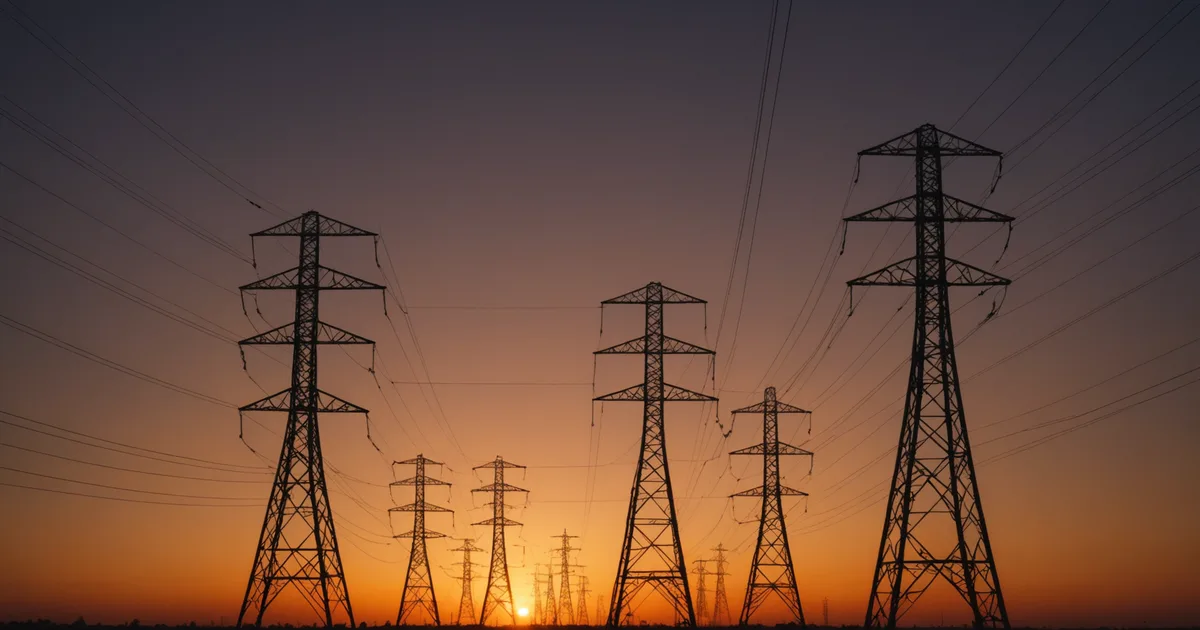
Every megawatt-hour a data center buys from the grid carries embedded costs that have nothing to do with generating that electricity. There are transmission charges, distribution charges, capacity payments, ancillary service fees, and sometimes congestion pricing on top of the generation cost itself. The exact structure varies by market, but the total delivered cost of grid power to a large industrial customer is typically 30 to 60 percent higher than the wholesale generation cost. For a facility consuming tens of megawatts around the clock, that gap is not a rounding error.
Direct connection to a co-located generation source removes most of those embedded costs. You pay for the energy you generate and the infrastructure needed to deliver it to your switchgear. You do not pay for transmission access, congestion, or the ancillary services required to keep a large interconnected grid stable. This is a structural advantage, not a marginal one.
The Interconnection Cost Many Operators Miss
Grid connection itself has become expensive and slow. In most US ISO markets, a new large-load interconnection request initiates a study process that involves transmission owners modeling the impact of the new load on the existing network. Upgrades required to accommodate the new connection are typically charged to the interconnection customer. For a 20 to 40 MW data center load in a congested area, those upgrade costs can run well into eight figures depending on the specific network conditions at the point of interconnection.
Beyond cost, the timeline has extended significantly. In many markets, new large-load interconnection studies are now taking three to four years or more from application to commercial operation, due to the volume of requests in queue. A data center developer planning a facility that needs to be operational in 2029 or 2030 who relies on a new grid interconnection may be making an optimistic assumption about the availability of that capacity.
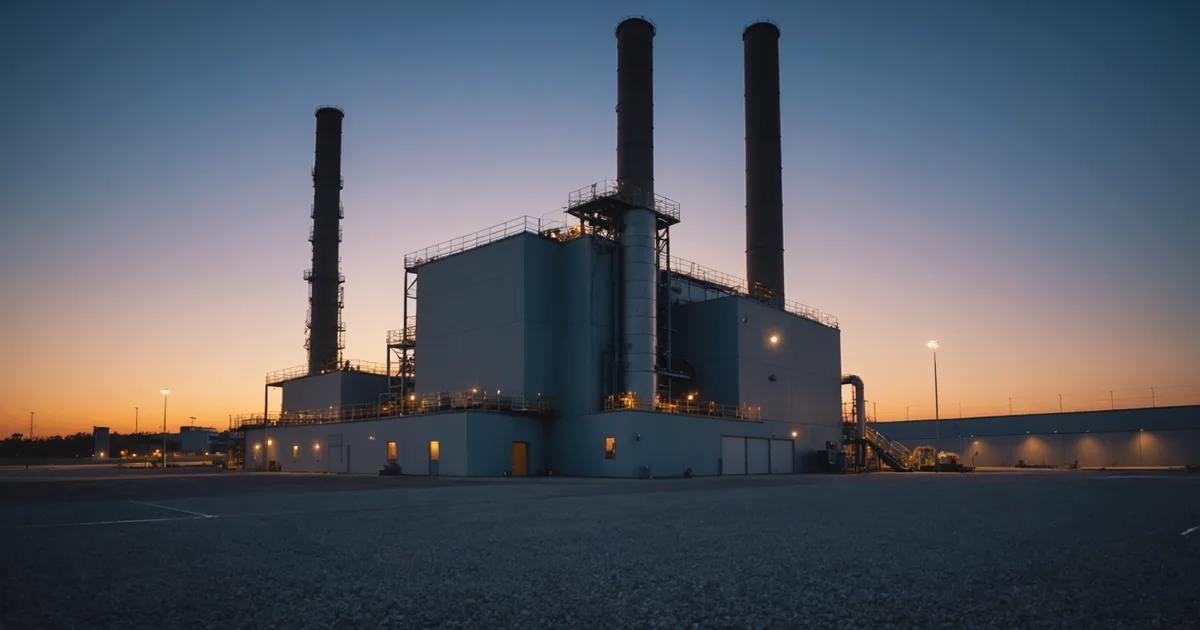
A campus with a co-located fission unit does not require a new transmission interconnection at all for its primary power source. It needs a utility interconnection for grid backup and emergency isolation, but that is a much simpler and smaller connection than what would be needed to serve the facility's full load from the grid.
Transmission Losses Are Real
Average transmission and distribution losses in the US are typically cited in the range of 5 to 6 percent nationally. That is the average across all voltage levels and distances. For power delivered over high-voltage transmission lines from a remote generation source to a substation serving a large load, the actual losses on that specific delivery path may be higher or lower depending on distance and load conditions.
In a direct connection arrangement, where the generator is co-located with the load and power flows over a short bus connection at distribution voltage, transmission losses are close to zero. Every kilowatt-hour generated is a kilowatt-hour available to the facility. At 20 MW of continuous load over a year, the energy avoided by eliminating 5 percent transmission losses is approximately 8,760 MWh. At a wholesale power price of $50 per MWh, that is roughly $440,000 annually just from the loss reduction. Over a 20-year plant life, the compounded value of that avoided loss at any reasonable discount rate is material in a project economics model.
Spot Market Volatility and Contract Structures
Data centers purchasing power from the grid either transact in spot markets or lock in through power purchase agreements. Spot market purchases expose the operator to real-time price volatility, which in markets with high renewable penetration can be extreme. Negative pricing events coexist with price spikes driven by thermal generation scarcity. Neither is predictable at the planning horizon a capital-intensive facility needs.
PPAs from renewable generators offer better price certainty but introduce basis risk between the contract price and the market price at the load point, as well as the shape mismatch problem between variable generation output and continuous facility demand. Firming renewable PPAs with storage or backup generation adds cost back in and reintroduces capacity uncertainty.
A long-term power supply agreement with a co-located fission unit has a fundamentally different structure. The primary cost driver is capital amortization and fuel cycle cost, both of which are known at contract execution and change slowly. Operating costs for nuclear plants are predominantly fixed, meaning the levelized cost does not spike with fuel commodity prices the way natural gas generation does. Price certainty over a 20-year horizon is genuinely achievable in a way that grid-connected alternatives cannot match.
Carbon Pricing Exposure
An increasing number of jurisdictions have carbon pricing mechanisms, and the trend toward expanded carbon pricing in the US is real regardless of the exact policy path. Data centers purchasing power from fossil-fueled grid generation carry carbon cost exposure that will grow over time as carbon pricing expands and as voluntary commitments to zero-carbon operations become harder to satisfy with REC accounting alone.
Fission generation produces effectively zero direct carbon emissions. A facility powered primarily by a co-located fission unit has close-to-zero Scope 2 emissions from electricity consumption without needing to purchase renewable energy credits as an accounting instrument. That is a real attribute with value both for voluntary corporate commitments and for compliance with emerging carbon regulations.
The Capital Structure Question
The obvious objection to the economics described above is capital cost. A co-located fission unit is not cheap to build. The capital committed upfront is substantially higher than a grid connection fee, and the amortization of that capital is the dominant term in the levelized energy cost calculation for nuclear power.
We are not claiming the economics work for every facility or every operator. For a small data center consuming a few megawatts and operating for five years, they clearly do not. The model works for large, long-lived facilities with high utilization, where the capital commitment is spread over enough energy output to produce a competitive levelized cost, and where price certainty and reliability premiums justify the upfront commitment.
For the specific segment we are targeting, large-scale AI compute infrastructure with multi-decade planning horizons and high capacity utilization requirements, the economics are genuinely competitive once the full cost of grid-connected alternatives is accounted for correctly. The comparison point is not just the wholesale generation cost. It is the delivered cost of reliable, continuous, low-carbon power over the life of the facility, including interconnection costs, transmission charges, backup capacity, and carbon exposure. When the comparison is made on those terms, the case for co-located nuclear is stronger than most infrastructure buyers initially assume.