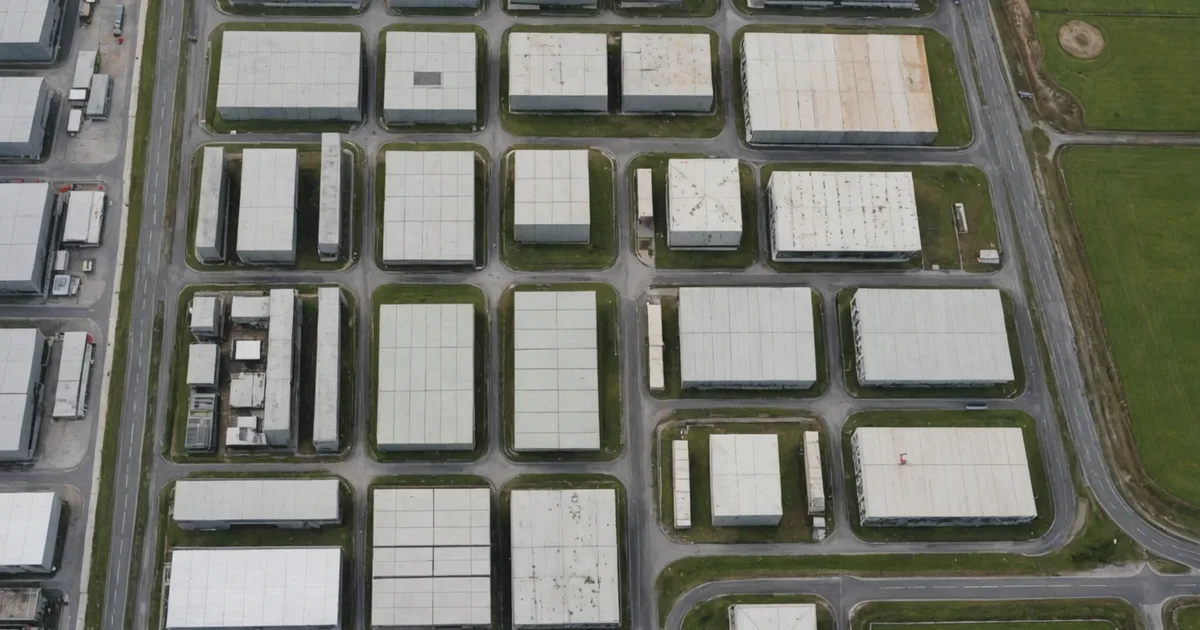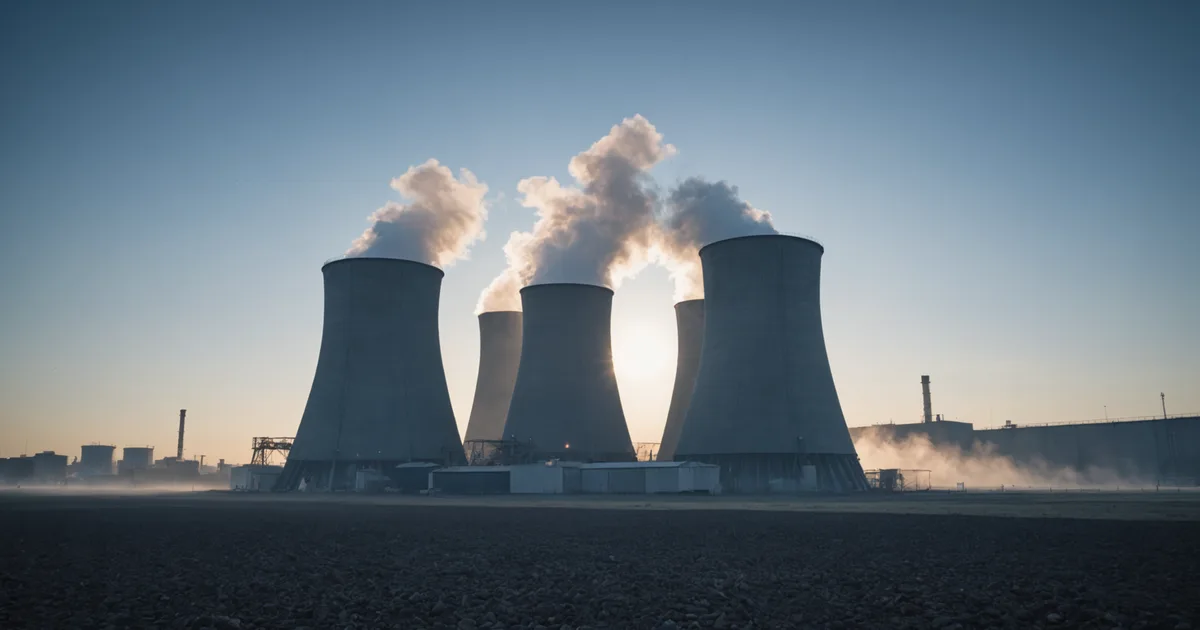
The nuclear industry conversation tends to conflate two categories of plant that have almost nothing in common from a design, deployment, or commercial standpoint. When people say "nuclear power," they typically picture a 1,000 to 1,700 MW light water reactor connected to a regional transmission grid, serving hundreds of thousands of customers through a utility rate structure. That picture is not wrong for its context. It is simply a description of a completely different product from what compact fission development companies are building.
We spend a fair amount of time in conversations with data center operators and infrastructure investors explaining this distinction. The confusion is understandable, but it matters for evaluating whether compact nuclear is a viable option for a specific facility.
What Utility-Scale Nuclear Is Designed For
A gigawatt-class light water reactor, whether pressurized water or boiling water design, is engineered for one primary purpose: produce a large, continuous block of power and deliver it reliably to a regional transmission network for decades. Everything about the design follows from that requirement.
The scale is large because the economics of nuclear fuel processing, containment structure, and turbine-generator systems favor large units. Fixed costs are substantial regardless of output, so spreading them over more megawatts reduces the levelized cost. A 1,600 MW plant has roughly twice the thermal generating capacity of an 800 MW plant but does not require twice the regulatory staff, the emergency planning zone personnel, or the fuel handling infrastructure.
The regulatory framework for these plants, 10 CFR Part 50 combined license applications and the associated safety analysis reporting requirements, evolved over decades primarily for this class of reactor. The enormous body of operational data, safety analysis, and regulatory precedent that exists is almost entirely for large light water reactors of this type.
What Compact Fission Is Designed For
A compact fission unit in the 4 to 12 MW range is solving a different problem. The customer is not a regional grid. The customer is a single facility, or a small cluster of facilities, that needs a dedicated, reliable, on-site power source. The design priorities shift accordingly.
Physical footprint becomes important in a way it is not for utility-scale plants, which are sited in isolated areas where land area is not a binding constraint. Compact units need to fit within or adjacent to a campus. The exclusion zone radius mandated by NRC regulations is directly related to the reactor's source term, which is directly related to the fissile inventory, and a smaller fissile inventory at lower power density means a smaller exclusion zone. That is not just a regulatory convenience; it is what makes co-location with an operating data center realistically possible.
Load-following capability matters for a dedicated facility power source in a way it does not for a baseload grid-supply plant. The facility's power demand varies, and a power source that cannot track that variation either wastes generated energy or requires the facility to maintain an expensive and complex power balancing arrangement. Compact reactor designs can be built around control systems optimized for load-following in a way that utility-scale plants, designed primarily for full-power baseload operation, are not.
The Cost Structure Looks Different
Utility-scale nuclear achieves low levelized energy cost through high capital investment spread over enormous output volume. The overnight capital cost per unit of installed capacity for large light water reactors has been substantially above early estimates in recent US and European projects, and the per-MWh economics are sensitive to construction timeline and cost overruns in a way that has proven difficult to control.
Compact fission at small scale does not achieve low levelized cost through the same mechanism. The capital cost per installed kilowatt is likely to be higher than utility-scale, at least initially. The value proposition is different: price certainty over a long contract horizon, delivered reliability that grid-connected power cannot guarantee, the avoidance of interconnection and transmission infrastructure costs, and the reduction in grid dependency for facilities where reliability carries a premium.
Whether the economics work depends on the specific facility's cost of alternatives. For a hyperscale data center paying transmission charges, interconnection upgrade costs, and spot market risk premiums, the comparison is not against cheap grid power. It is against the fully loaded cost of reliable power over 20 years. That comparison is more favorable to compact fission than the generation cost comparison alone.
The Regulatory Paths Are Genuinely Different
The NRC Part 53 rulemaking, finalized in 2024, created a technology-inclusive licensing framework specifically for non-light-water and advanced reactor designs. This matters because Part 50, the framework under which all operating US nuclear plants were licensed, assumes a light water reactor architecture in ways that create unnecessary burden for designs that are fundamentally different in their safety characteristics.
A compact non-light-water design with passive safety features and a small fissile inventory presents a different risk profile from a large pressurized water reactor. The emergency planning zone requirements, the source term assumptions, and the safety analysis requirements that are appropriate for a gigawatt-class plant may not be appropriate, in either direction, for a compact unit with different decay heat characteristics and failure modes. Part 53 allows the licensing case to be built around the specific design's actual characteristics rather than forcing it into a framework designed for a different class of reactor.
They Are Not Competing for the Same Customers
The most important practical point is that utility-scale nuclear and compact fission are not competing products in any real commercial sense. A regional utility considering how to serve 500,000 customers across a multi-state service territory is not choosing between a 1,600 MW plant and a collection of 8 MW units. The operational complexity and transmission infrastructure requirements of the latter at that scale would be unworkable.
Conversely, a data center developer planning 20 MW of dedicated campus power for a new AI compute facility is not choosing between compact nuclear and a share of a utility's gigawatt reactor output. Grid-connected power from a utility plant goes through multiple layers of transmission, distribution, and pricing infrastructure before reaching the facility. A compact co-located unit is a fundamentally different commercial arrangement.
We are not trying to replace utility-scale nuclear. We are building power infrastructure for a specific customer segment that utility-scale nuclear does not serve and was never designed to serve. The comparison that matters for our customers is not "compact fission vs. large reactor." It is "compact fission vs. whatever they are currently using or planning to use for campus power." That is where the decision actually gets made.