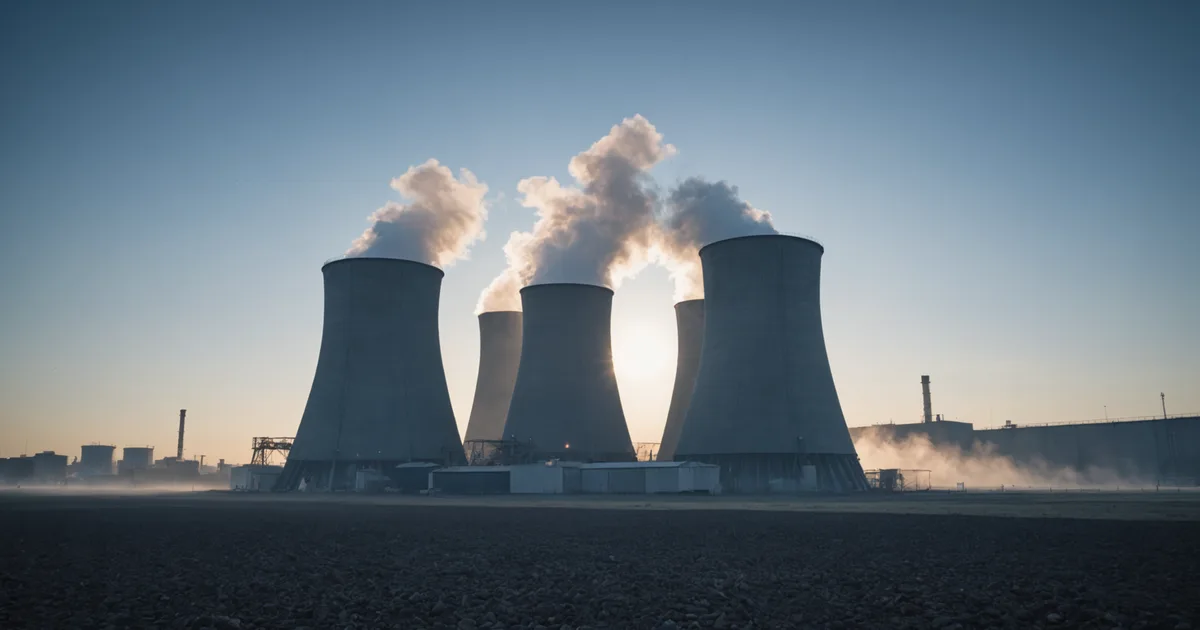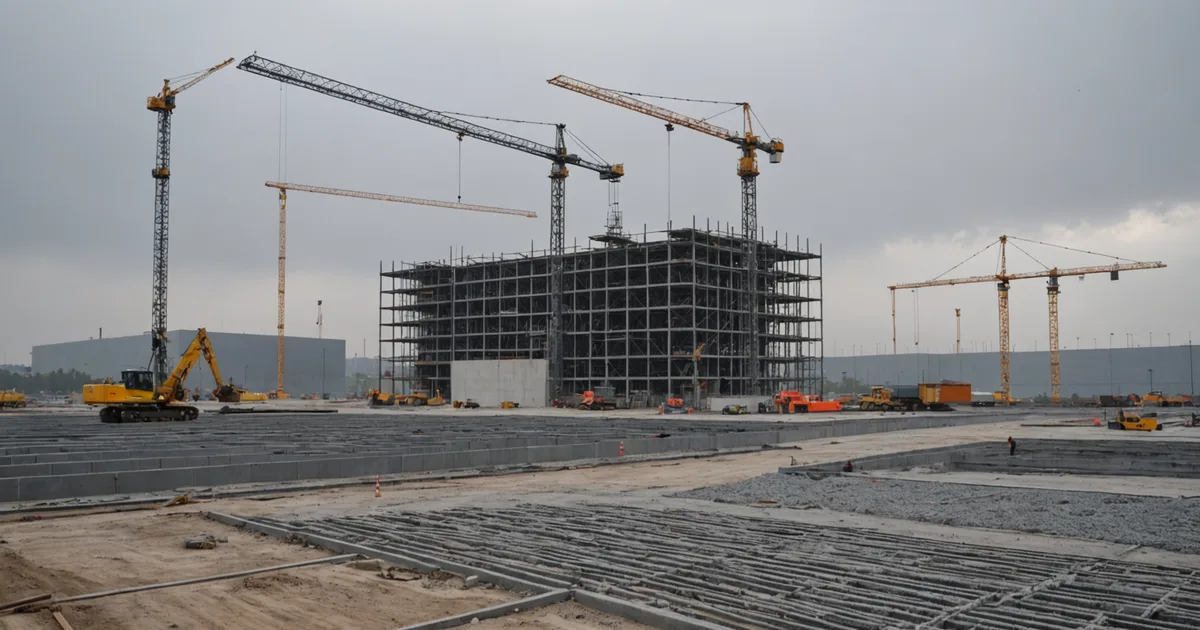
The NRC licensing process for nuclear reactors is not a single pathway. It is a collection of regulatory frameworks, each developed at a different point in the industry's history, each carrying different procedural requirements and documentation burdens. For advanced reactor developers, understanding which framework applies to a given design, and why, is foundational to planning a credible development timeline.
At Applied Atomics, regulatory strategy is not something we treat as a late-stage activity. Rebecca leads our regulatory preparation efforts from day one of design development, because the licensing pathway shapes the design requirements, not the other way around. What follows is our working understanding of the landscape, written for infrastructure buyers who are evaluating nuclear options and want to understand what they are actually committing to on the regulatory side.
Part 50 vs. Part 52: The Traditional Pathways
The original NRC licensing framework for commercial nuclear plants is contained in 10 CFR Part 50. This regulation provides two primary licensing routes: a construction permit followed by an operating license, or, under later amendments, a combined license that covers both construction and operation. All currently operating US commercial nuclear plants were licensed under Part 50 frameworks.
Part 52, finalized in 1989, introduced a new licensing mechanism: the design certification. A reactor designer can seek NRC approval for a standardized design independent of a specific site, obtaining a design certification rule that can then be referenced by operators applying for a combined license for a specific location. The expectation was that design certification would streamline licensing for new builds by resolving design-specific issues once, not repeatedly. In practice, for advanced non-light-water reactor designs, neither Part 50 nor Part 52 was written with those architectures in mind, and the fit is imperfect in ways that add regulatory burden without corresponding safety benefit.
Part 53: The Technology-Inclusive Framework
The NRC's Part 53 rulemaking, formally titled "Risk-Informed, Technology-Inclusive Regulatory Framework for Advanced Reactors," addresses the mismatch between the existing regulatory framework and the characteristics of non-light-water advanced reactor designs. The final rule was published in the Federal Register in 2024.
Part 53 does not prescribe a specific safety approach. Instead, it establishes performance-based requirements that a reactor design must meet, allowing applicants to demonstrate compliance through any technically defensible approach rather than through prescriptive conformance with rules written for pressurized water reactor architecture. This is directly relevant for compact designs that use different coolant systems, different passive safety mechanisms, and different fuel forms than the light water reactors that generated most of the existing regulatory precedent.
The framework introduces the concept of a "licensing basis event" analysis as the primary safety case structure, replacing the prescriptive "design basis accident" analysis framework that Part 50 uses. A licensing basis event analysis builds the safety case around the actual risk-significant event sequences for the specific design rather than requiring analysis of standardized bounding accidents that may have limited applicability to a novel reactor type.
Pre-Application Engagement
Regardless of which licensing pathway an advanced reactor developer pursues, pre-application engagement with the NRC is not optional in any practical sense. The agency offers several mechanisms for pre-application interactions, including pre-application meetings to discuss proposed regulatory approach, topical report reviews on specific technical topics where regulatory clarity is needed, and white paper submissions that allow applicants to propose design-specific approaches for staff review before committing them to a formal application.
These interactions serve multiple purposes. They identify potential regulatory issues early, when design changes are still relatively inexpensive. They build a record of regulatory positions that can be referenced in the formal application. They give NRC staff familiarity with the design, which reduces review time on the formal application. For a novel design concept, pre-application engagement is where the actual regulatory work begins.
We are currently in the early phases of pre-application preparation. That means defining the regulatory basis document, identifying the specific technical topics where we will need to seek NRC clarity, and building the safety analysis infrastructure needed to support those conversations. This work is happening in parallel with design development because the two are not separable.
The Emergency Planning Zone Question
One of the most practically significant regulatory variables for compact fission co-location with a data center is the emergency planning zone, or EPZ. Under current regulations, operating commercial nuclear plants maintain a 10-mile EPZ around the facility, within which emergency response plans must be in place and tested. For a facility co-located with an operating data center campus, a 10-mile EPZ would extend into populated areas and potentially over other industrial or commercial facilities, creating planning requirements that are operationally complex.
Part 53 explicitly contemplates technology-specific EPZ determinations based on actual source term analysis for the specific design, rather than defaulting to the 10-mile standard established for large light water reactors. For a compact design with a small fissile inventory and passive decay heat removal that does not require active cooling to prevent core damage, the actual consequence analysis may support a substantially smaller EPZ, potentially an on-site or fence-line EPZ. This determination requires detailed source term analysis and NRC review, which is exactly the kind of design-specific work Part 53 was structured to accommodate.
We are not claiming an EPZ determination outcome at this stage. That determination requires engineering analysis we have not yet completed and NRC review of that analysis. What we can say is that the regulatory framework now exists to make this determination in a technically defensible way, which was not clearly the case under Part 50.
Timeline Honesty
Advanced reactor licensing under any framework is a multi-year process. Pre-application preparation and engagement typically takes two to three years. A formal license application under Part 53 review is currently anticipated to take approximately two to four years from submission to decision, depending on design complexity and the completeness of the application. Construction, assuming a combined license approach, overlaps with the license process but cannot complete before the license is issued.
The total timeline from where a company like Applied Atomics sits today to commercial operation of a first unit is measured in years, not months. We say this directly to our potential partners because the decision to engage with us is a decision about a multi-year infrastructure development process, not a near-term power procurement. Operators who need dedicated campus power available in 2030 need to be in early conversations now. This is not a conventional power purchase where lead time is measured in quarters.