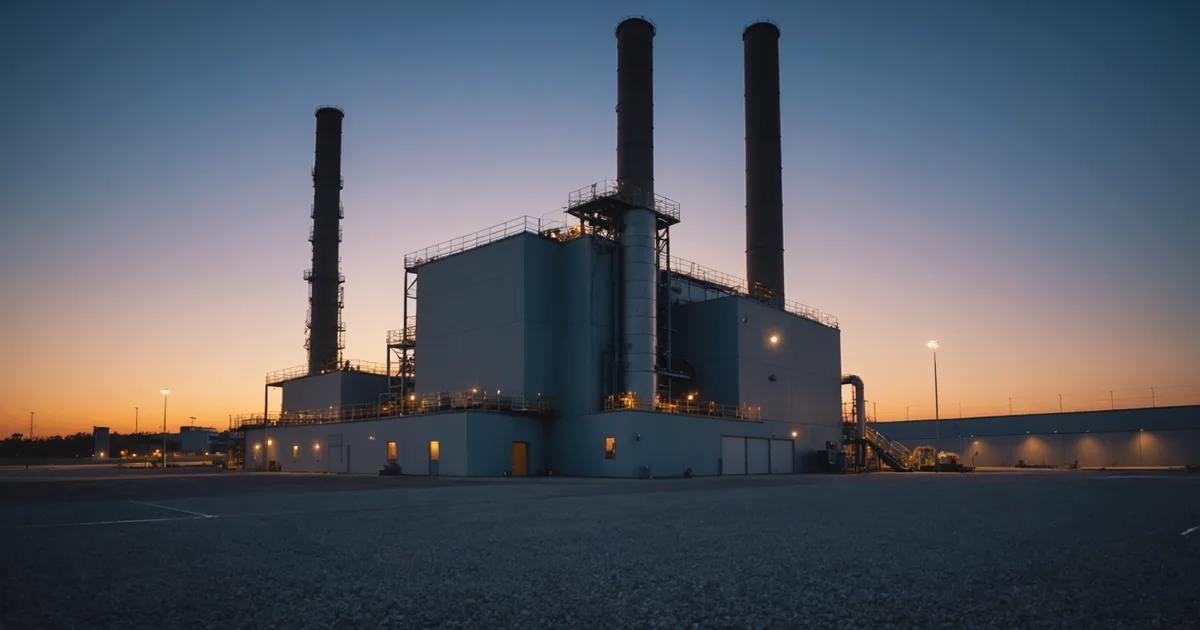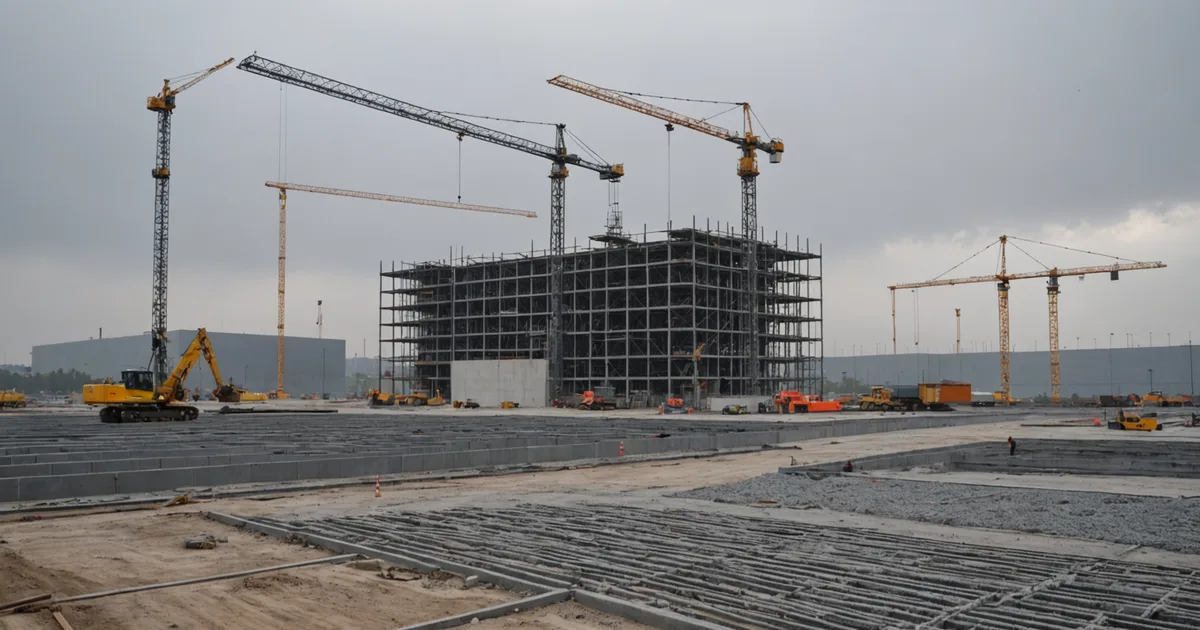
One of the first questions data center operators ask when we describe what we are building is: how long does this take? The honest answer is that a compact fission plant, from initial engagement through operational first power, is a multi-year project. The specific timeline depends on design maturity, site conditions, regulatory pathway, and the degree to which early project phases can run in parallel. But anyone expecting to have on-site nuclear power generation within two years of a decision to proceed is working with the wrong mental model.
This is not a deterrent. It is a planning parameter. Data center operators who want dedicated fission power in the 2030 to 2032 window need to be in early conversations now, because the front-end work that determines whether the later phases can execute on schedule is done in the first year or two, not during construction.
Phase 1: Site Assessment and Pre-Application Engagement (12 to 18 Months)
Before any license application is submitted to the NRC, a development team needs to complete a site characterization sufficient to support the application. This covers seismic analysis, hydrology, soil bearing capacity, proximity to sensitive receptors, and an evaluation of the site against the applicable General Design Criteria and site suitability requirements under 10 CFR Part 100 (or the equivalent provisions under Part 53 for a new license application). For a compact non-light-water reactor design, the site suitability analysis involves demonstrating that the exclusion area and low-population zone criteria can be met with the specific plant's accident source term, which for passively safe designs is typically significantly smaller than for legacy light-water plants.
Concurrently with site work, pre-application engagement with the NRC is valuable and time-well-spent. The NRC's pre-application process allows development teams to discuss key design features, identify potential novel licensing issues, and establish shared understanding on topical reports or methodology approvals before the formal review clock starts. Teams that skip or abbreviate this step often encounter questions during formal review that require additional information submissions, effectively stretching the review period.
Phase 2: License Application Preparation (18 to 24 Months)
Preparing a construction permit application or a combined license application under Part 52 requires a substantial body of technical documentation. The Safety Analysis Report (SAR) alone typically runs to several thousand pages covering reactor physics, thermal-hydraulic analysis, accident scenario bounding, instrumentation and control design, and emergency planning. Supporting this documentation requires design work to be sufficiently mature to support the analyses, which creates a dependency on how far along the reactor design is when the application phase begins.
Under the Part 53 technology-inclusive framework finalized in the NRC's recent rulemaking, the application structure for non-light-water designs has more flexibility in how it addresses the design bases. However, this flexibility comes with the responsibility of clearly establishing the analytical framework the applicant is using and justifying any deviations from the standard methods documented in the Standard Review Plan. Applications that rely on novel computational methods or codes require topical report approval before or concurrent with the main application, which needs to be planned into the schedule.
Environmental review, which feeds the Environmental Impact Statement or Environmental Assessment under NEPA, runs in parallel with the safety review but on its own timeline. For a data center co-location application on an industrial site, the environmental review scope is typically narrower than for a utility-scale plant, but it cannot be compressed below the statutory timelines for public comment periods and agency coordination.
Phase 3: NRC Review and License Issuance (24 to 36 Months)
The NRC's review duration for an advanced reactor application is a function of application completeness, staff resources, and the complexity of the design issues raised. The agency has published target review periods for Part 53 applications, but these targets assume an adequately prepared application with no major novel issues. Applications that arrive with gaps in supporting documentation, or that raise novel technical issues without pre-established analytical frameworks, extend beyond the target review periods.
This is where early pre-application engagement pays off. Teams that have worked through the key technical questions with staff before submitting have a higher probability of a review that stays close to the target schedule. Teams that use the formal review as the first opportunity to resolve design or methodology questions will spend time answering requests for additional information, each of which inserts weeks to months into the schedule.
We are not saying that advanced reactor licensing is impossible or that the NRC is an obstacle. The agency has invested substantially in developing review capability for non-light-water designs. But the schedule is what it is, and planning must account for it.
Phase 4: Construction and Commissioning (24 to 48 Months)
Once a license authorizing construction is in hand, the construction phase begins. For a compact plant in the 10 to 50 MW electrical output range with modular factory-fabricated major components, construction at site is faster than for a utility-scale plant where most fabrication happens in the field. The containment structure, below-grade civil work, and major mechanical installation are the long-lead items. With a licensed design and pre-qualified fabricators, the construction critical path can be compressed significantly compared to early nuclear construction projects.
Commissioning follows construction and involves bringing systems up progressively, verifying performance against design specifications, and completing the NRC's pre-operational inspections and tests. For a novel reactor design, this phase requires careful management because there is no predecessor plant from which to borrow commissioning procedures directly. The commissioning plan needs to be developed and reviewed as part of the licensing basis.
What the Full Timeline Adds Up To
Summing the phases above: an operator who initiates serious engagement with a compact fission developer in 2025 or 2026, with a site identified and development resources committed, is on a realistic path to first power in 2031 to 2033. That is not a feature of bureaucratic delay. It is the physical and analytical reality of nuclear plant development. Site characterization takes the time it takes. License applications require the analysis that they require. Construction involves the physical work that it involves.
The data center operators who should be thinking about this now are not necessarily the ones who need power next year. They are the ones whose capacity planning extends to 2030 and beyond, who are evaluating whether to lock in long-term utility contracts, build dedicated gas generation, or pursue a different technology pathway. For that planning horizon, compact fission is a credible option, but only if the conversation starts well before the power is needed.
That is why we engage with prospective partners at the early planning stage. By the time you need the power, it is too late to start.