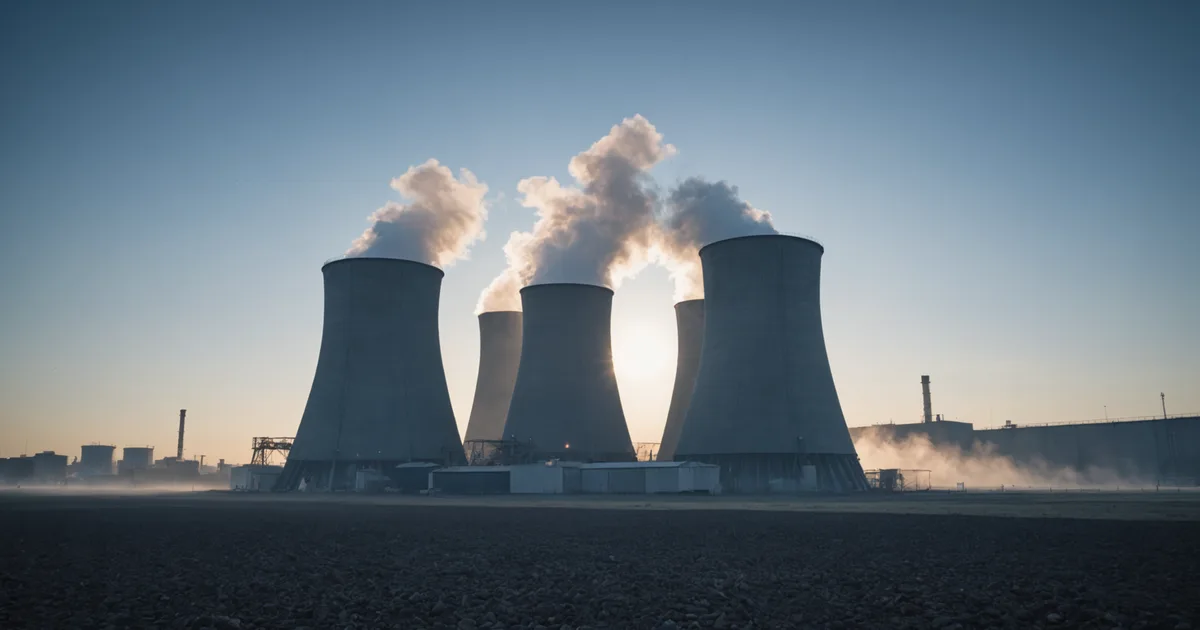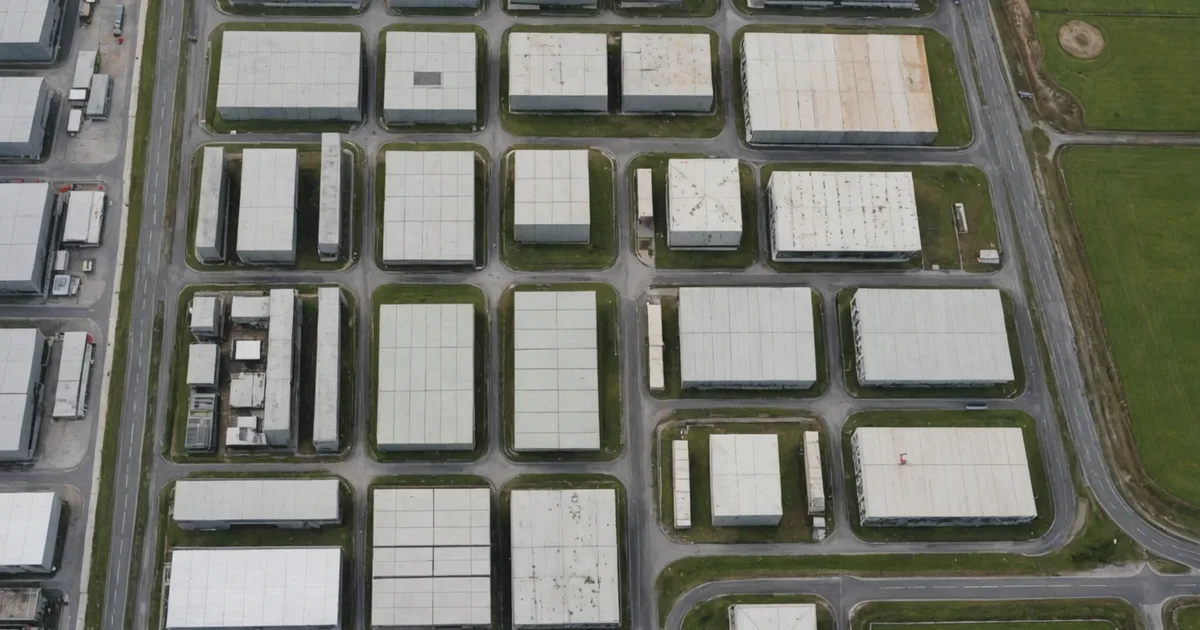
When data center developers hear "nuclear plant on campus," the instinctive mental image is of cooling towers visible from the highway and a 10-mile radius emergency planning zone drawn on a county map. That image is accurate for a 1,200 MW pressurized water reactor built in the 1970s. It is not accurate for a compact fission unit in the 4 to 12 MW range with passive safety features and a small fissile inventory. The physical reality of what a co-located plant actually looks like is different enough that it is worth working through the actual siting variables in concrete terms.
This is not hypothetical speculation. Siting analysis is one of the core activities in our current design work. The constraints are real and they shape the design. Here is what they actually are.
The Exclusion Zone
The exclusion zone is the most commonly misunderstood element in public discussion of nuclear plant siting. Under NRC regulations, the exclusion zone is the area immediately surrounding the reactor where the reactor licensee has authority to determine all activities. It is not a mandatory residential evacuation zone. It is not the emergency planning zone. It is the controlled land area around the plant itself, within which the licensee ensures no incompatible activities occur.
For operating US commercial plants, exclusion zone radii vary from under a kilometer to several kilometers depending on the facility, site geography, and the specific safety analysis results. The exclusion zone radius is determined by the dose consequence analysis for the design basis accident, specifically the two-hour whole-body gamma dose and the two-hour thyroid dose at the exclusion zone boundary, which must remain below NRC limits under 10 CFR 50.34.
For a compact fission unit with a small fissile inventory and passive decay heat removal, the source term, the quantity and character of radioactive material that could be released in a worst-case event, is substantially smaller than for a large reactor. The consequence analysis that determines the exclusion zone radius reflects that smaller source term. We are not in a position to state an exclusion zone radius before the safety analysis is complete and reviewed, but the physics of small inventory plus passive safety substantially reduce it relative to utility-scale plants.
The Physical Plant Footprint
Separating the exclusion zone question from the physical plant footprint question is important. The physical footprint is the land area occupied by the reactor building, the turbine-generator building, the spent fuel storage pad, the balance of plant infrastructure, and the site access and security perimeter. This is the acreage that needs to be owned or controlled by the operator and improved to industrial standards.
For a compact unit in our target power range, the primary containment structure for the reactor pressure vessel and primary loop is physically small. The heat exchanger and secondary loop systems that produce steam for the turbine-generator occupy additional space, but at compact scale these are not the multi-acre structures that utility-scale plants require. A realistic estimate for the total improved plant footprint at our target scale is in the range of 2 to 5 acres depending on the cooling system configuration, with the reactor containment itself occupying a fraction of that. This is a scale that fits on a large data center campus without displacing the primary facility.
Cooling Infrastructure and Site Constraints
The balance-of-plant element that most significantly affects siting flexibility is the cooling system. A steam turbine cycle requires heat rejection somewhere in the thermal loop, and the options are wet cooling towers, dry cooling systems, or a water body heat sink.
Wet cooling towers are common for large nuclear plants because they are efficient and manageable at scale. For a compact unit, wet cooling towers sized for the thermal output are small, roughly analogous to the cooling towers used for large industrial HVAC systems, and they can be sited within the plant perimeter. Water consumption for a unit in our target range is modest relative to the water usage of a large data center's own cooling infrastructure.
Dry cooling is less efficient thermally but eliminates water consumption entirely. For sites in water-constrained regions or where local permitting for water withdrawal is an issue, dry cooling is a credible option for a compact unit, with some efficiency penalty on the power cycle. Large plants rarely use dry cooling because the efficiency penalty at their scale is economically significant. At compact scale, it is a reasonable tradeoff for siting flexibility.
Some compact reactor designs are being developed for coupling to high-temperature process heat applications where the steam is used directly rather than driving a turbine. For data center power, the electrical output from a turbine cycle is the primary product, but the thermal output available for district heating, district cooling, or process heat to adjacent industrial users is a secondary value stream worth noting in site planning.
Seismic and Geological Requirements
Nuclear plant siting includes geotechnical evaluation for seismic hazard, foundation stability, and groundwater conditions. The NRC's site suitability criteria are in 10 CFR 100, though Part 53 introduces some flexibility in how these criteria apply to advanced designs. Seismic hazard assessment is a site-specific analysis that requires geophysical investigation, not a simple table lookup, and the results affect foundation design and the seismic qualification requirements for safety-significant structures and systems.
For a compact unit, the seismic qualification scope, the number of structures and systems that require seismic analysis and qualification testing, is smaller than for a large reactor because the safety-significant systems are fewer and simpler. This does not eliminate seismic work. It focuses it. A site with a low seismic hazard profile, which much of the central and western US outside of high-hazard zones has, simplifies the analysis. A greenfield data center campus siting process that includes geotechnical investigation can incorporate the nuclear siting evaluation at relatively low incremental cost.
What This Means for a Campus Conversation
A realistic picture of compact fission siting looks like this: a 2 to 5 acre plant area within or adjacent to the data center campus, with a controlled exclusion zone that may extend some additional distance depending on the final safety analysis results. An emergency planning zone determination under Part 53 that reflects the actual design's consequence analysis rather than defaulting to 10 miles. Cooling infrastructure that is compatible with the water and thermal management systems already present on a large data center campus. Geotechnical requirements that can be evaluated as part of site selection.
This is a sizable infrastructure commitment. It is not the 10-mile radius nightmare that leads some infrastructure buyers to dismiss nuclear co-location before the conversation begins. The developers we talk with who engage seriously with these numbers typically conclude that the siting constraints are manageable for the right type of campus at the right site. That is the conversation worth having.