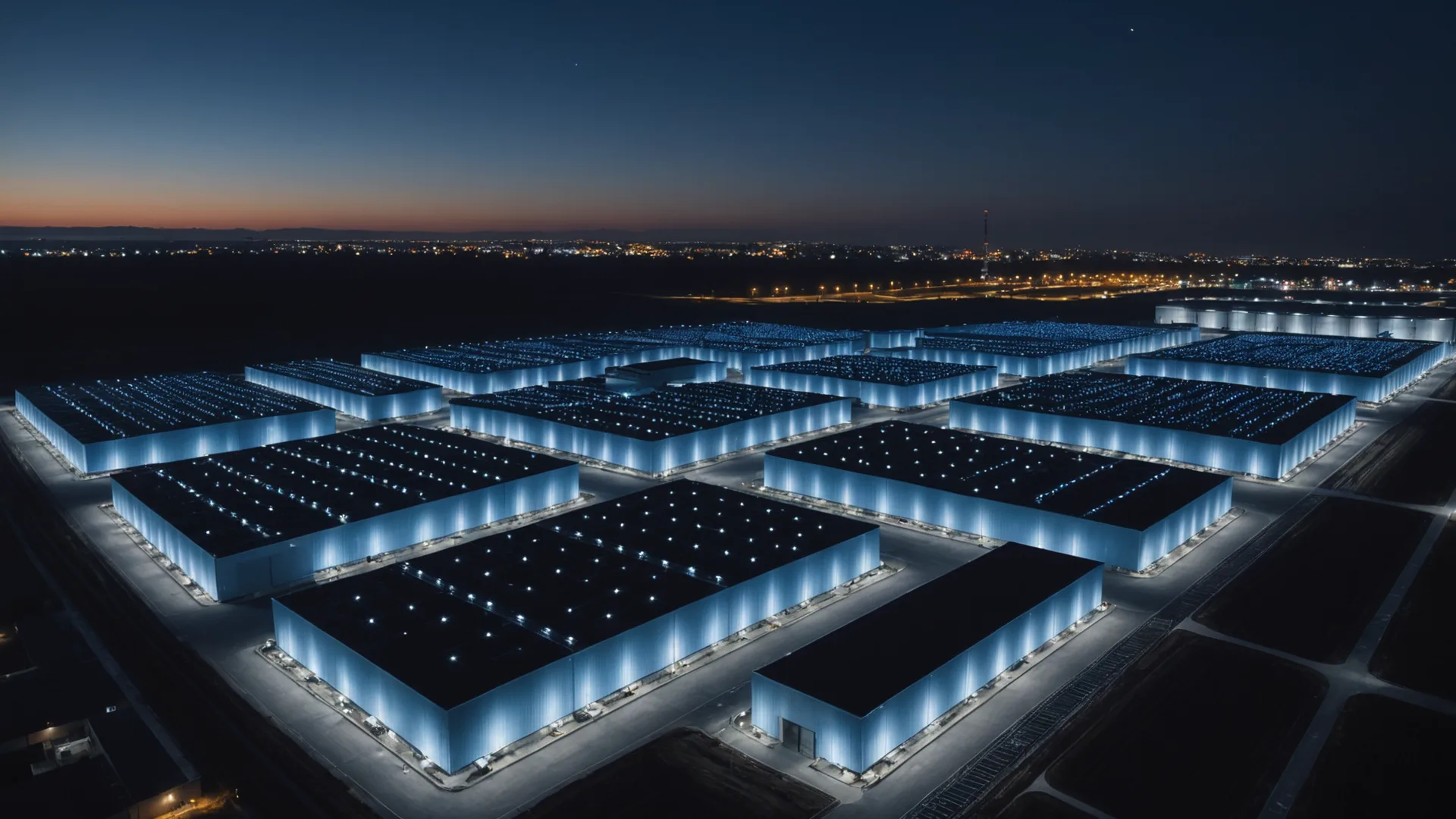
Dedicated clean power for your campus
Data centers running GPU clusters at capacity need firm power around the clock. Grid interconnection queues stretch five to seven years in most markets. We build the generation and bring it to you.
Grid interconnection is not a solution for AI-era demand
Data center operators pursuing new campus capacity face the same set of constraints regardless of market: interconnection queues measured in years, transmission infrastructure not built for distributed load growth, and price exposure tied to wholesale market volatility.
5 to 7 Year Interconnection Waits
US grid interconnection queues have grown from an average of 2.1 years in 2015 to over five years in most ISOs today, driven by the volume of new generation and load requests competing for limited transmission capacity. Public FERC interconnection queue data.
5 to 8% Transmission Losses
Power transmitted over long-distance lines loses 5 to 8% as heat before it reaches the load. At data center scale, that represents a material cost on every megawatt-hour purchased. Direct connection eliminates transmission losses entirely.
Volatile Wholesale Pricing
Grid-tied data centers face electricity price exposure through PPA or spot market mechanisms that fluctuate with fuel costs, weather events, and generation mix. A long-term take-or-pay PPA with a co-located source eliminates that variability from the operating cost model.
Emissions Accounting Pressure
Enterprise customers and regulatory bodies are increasing scrutiny of Scope 2 emissions from data center operations. Grid power with renewable energy certificates has verification gaps that direct zero-carbon generation does not, as the electrons and their carbon attributes originate from the same source.
From plant to switchgear in a single cable run
The output of the Applied Atomics turbine-generator connects directly to your campus medium-voltage switchgear. From there, power flows through your existing distribution infrastructure to the UPS systems serving each hall. No substation, no transmission line, no grid interconnect application.
The plant siting footprint is typically three to five acres adjacent to the campus boundary. Civil and electrical interconnect work between the plant and the campus switchgear is included in our installation scope. Your electrical team reviews and approves the integration design before construction begins.
Full technical architecture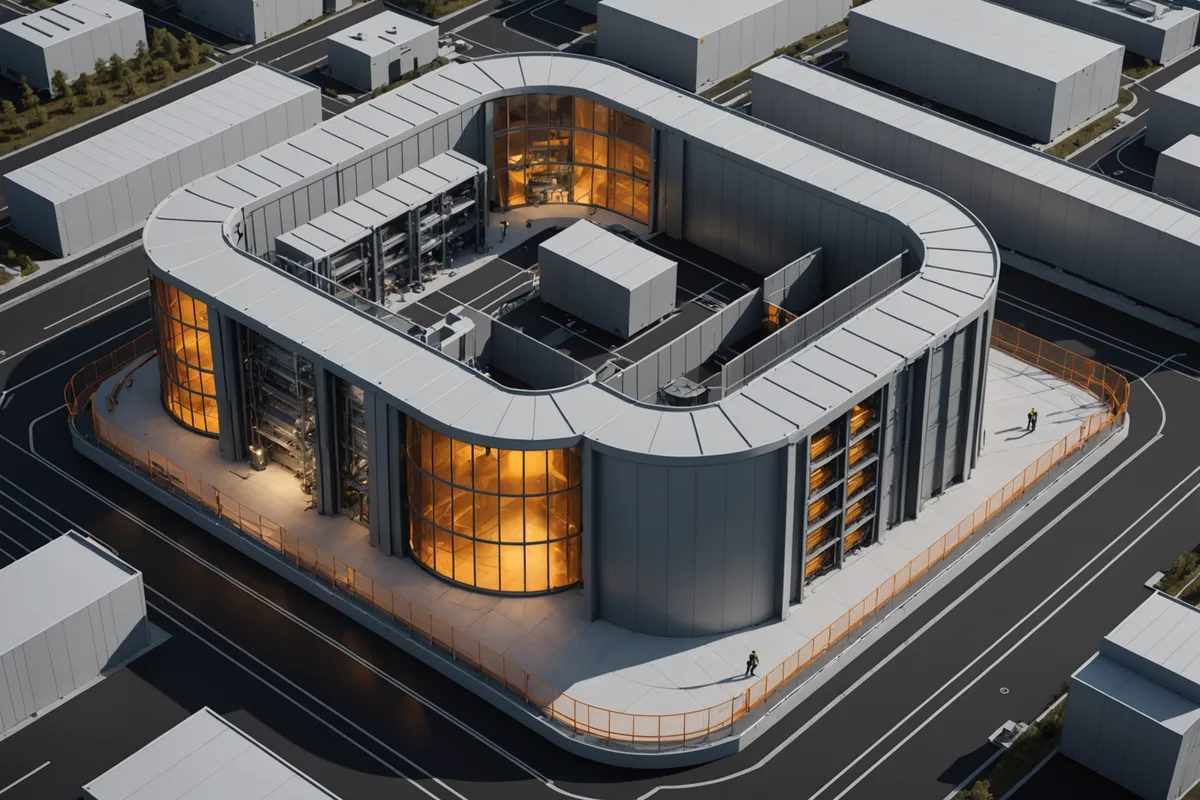
Design targets, stated as targets
These figures are our engineering design goals for the first commercial units. They are not values verified through operational data. We present them to give prospective partners a clear view of what the system is designed to do.
| Parameter | Design Target | Notes |
|---|---|---|
| Electrical output per unit | 4 to 12 MW | Scalable by unit count per campus |
| Capacity factor goal | > 90% | Baseload-mode operation, planned outages excluded |
| Dispatch response | < 5 minutes | AI-managed output adjustment from current state |
| Load-following range | 30% to 100% | Output modulation within safe operating envelope |
| Hot standby capability | Yes | Reactor maintained at operating temperature, output to zero on command |
| Site footprint | 3 to 5 acres | Includes containment, turbine hall, and dry cask storage pad |
| Water consumption | Closed loop | Air-cooled condenser option available for water-constrained sites |
Long-term power purchase with capital structure options
Our commercial model is a long-term take-or-pay power purchase agreement. You commit to a minimum MW capacity for the contract term; we build, own, operate, and maintain the plant, delivering power to your switchgear at a fixed price per MWh for the duration. The PPA structure eliminates your capital exposure to plant construction and operations.
For partners who prefer to own the asset outright, we can structure a build-own-transfer arrangement or a joint development agreement. Indicative pricing and structure options are shared in early partner conversations, not published. The first step is a brief technical and commercial alignment call.
Power Purchase Agreement
Fixed $/MWh for contract term. We own and operate the plant. You purchase the output.
Build-Own-Transfer
We build and commission, then transfer ownership to the campus operator at a pre-agreed valuation milestone.
Joint Development
Co-investment structure for partners who want equity in the generation asset alongside offtake rights.
Planning new campus capacity?
We are in preliminary discussions with data center developers across the US. If you are evaluating power options for a new build or expansion, we want to hear about your requirements before you finalize your grid application.
Start a Conversation